Bladder Cancer
Bladder cancer is the fourth most common cancer in men and ninth in women. Most cases are diagnosed in patients over the age of 55.
With early diagnosis bladder cancer is treatable.
Bladder cancer can be challenging because of its high rate of recurrence after initial treatment. It also has a high rate of progression to higher grade and stages of disease after initial treatment.
Bladder Cancer Intrduction Video
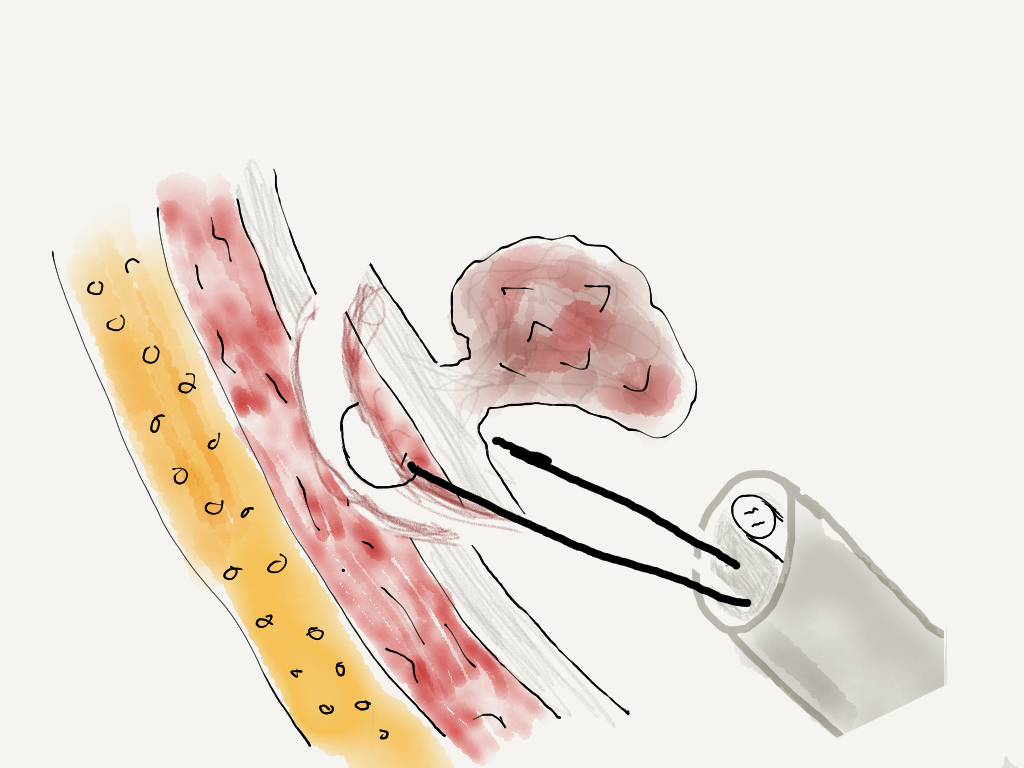
Transurethral Resection of Bladder Tumor
The first step in diagnosis is typically a resection of the bladder tumor, called a transurethral resection of bladder tumor.
The removal of the primary tumor (or tumors) is both diagnostic and therapeutic in many cases. The goal is complete removal of the tumor, including any growth into the bladder wall. The grade and stage of a tumor are determined by what the pathologist sees under the microscope from the resected specimen.
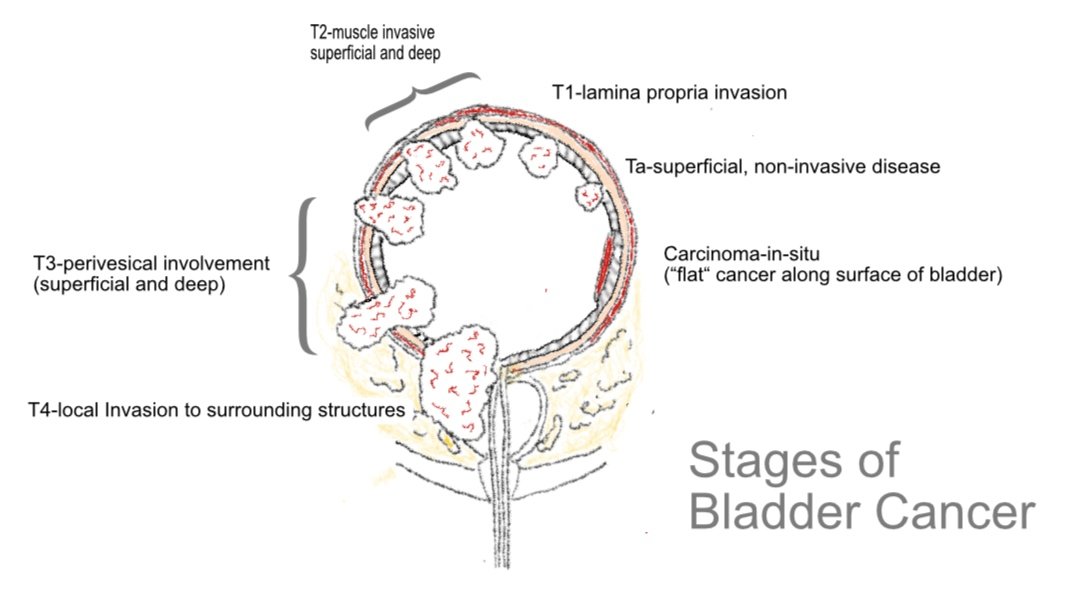
Grade and Stage of Bladder Cancer
The stage of a bladder cancer is the depth of invasion of the tumor. The stage is determined by the pathologist after reviewing the resected tumor under the microscope.
The grade of a bladder cancer is also determined by the pathologist, and is either low grade or high grade. Low grade tumors grow more slowly and tend to not be aggressive or invasive into the bladder muscle. High grade tumors grow more rapidly, have a higher chance of recurrence, and also have a higher chance of progression of the tumor to invade into the bladder wall.
Superficial and Low Grade
Many bladder tumors begin as a polyp, or a papillary tumor (on a stalk). Some are slower growing (low grade). These types of tumors are removed completely by transurethral resection, have low risk of progression, and most often do not need further treatment. Careful followup with in office cystoscopy is required.
Superficial and High Grade
Tumors that are faster growing (high grade) may still be superficial in nature, and removed completely by a transurethral resection. The high grade tumors must be monitored very closely because they recur more frequently and grow faster than lower grade tumors. Multiple superficial recurrence that are high grade may qualify for further intravesical (bladder installation) treatments done in office.
Non-muscle Invasive T1
Invasive tumors begin to invade into the bladder wall itself. Invasion into the lamina propria connective tissue layer of the bladder is the first stage of invasion. These tumors need careful evaluation and further treatment. If a tumor is diagnosed as a T1 tumor a more aggressive approach is used. The clinical guidelines from the AUA suggest repeat resection of the tumor area to ensure complete resection and no muscle invasion is identified. Some patients are upstaged to muscle invasive disease on the repeat resection. Next intravesical treatments are used, either BCG treatments or chemotherapy treatments such as gemcitabine and docetaxel.
A special circumstance involves patients with T1 disease that is high volume and/or combined with carcinoma in situ. These are patients who are at high risk for progression of cancer and should be considering bladder removal instead of bladder sparing approaches.
Carcinoma In-Situ
Carcinoma in situ (CIS) is a variant of bladder cancer that grows along the surface of the bladder, like a rug on the floor or a weed growing along the surface of a lawn. This is a difficult type to treat given the amount of the bladder surface involved. It is a cancer at high risk of progression. This type of cancer is treated by intravesical treatments primarily. BCG and gemcitabine/docetaxel are the treatments used most commonly. If those initial treatments fail secondary agents such as Adstiladrin, Anktiva and Inlexzo are second line treatments that have promise
Muscle Invasive T2 or T3
When a bladder tumor becomes muscle invasive then more aggressive surgery, chemotherapy or radiation treatments are needed. Patients with this level of cancer most often are choosing neoadjuvant chemotherapy followed by radical cystectomy (removal of the entire bladder) and urinary diversion. This is a major surgery. In males the prostate is also removed, in females the pelvic organs (uterus, cervix, ovaries, anterior vagina) are also removed. A pelvic lymph node dissection is also performed.
Alternatively some patients choose a bladder sparing approach using a combination of chemotherapy and radiation.
Advanced, Metastatic Cancer
In advanced disease, chemo, immuno and radiotherapy are used. Sadly, advanced bladder cancer has a very high rate of morbidity and mortality but with current chemotherapy and immunotherapy regimens there are cases of very good control of the cancer.
Upper Tract Tumors of Ureter and Kidney
The same type of cells that line the bladder also line the ureter and the kidney. these are tumors that are not as common, but must be treated aggressively. There is a seperate webpage on this website.