Advance XP Male Sling
An advance XP male sling is placed for men with urinary incontinence. Incontinence is leaking urine. Most commonly the sling is used after prostatectomy for treatment of prostate cancer.
The Advance XP male sling treats stress incontinence. Men using approximately 1-4 pads per day, with ability to start and stop urinary stream suggesting good sphincteric function, and incontinence stress related with coughing, sneezing, lifting, and active maneuvers are a candidate for the Advance XP male sling.
The AdVance XP Sling is designed to stop leakage by supporting the sphincter muscle. The sling is a strip of soft mesh placed inside the body. The AdVance XP Male Sling moves the sphincter back to its natural position to help restore bladder control. The AdVance XP Sling requires no machanical action by the patient in order to void or to store urine.
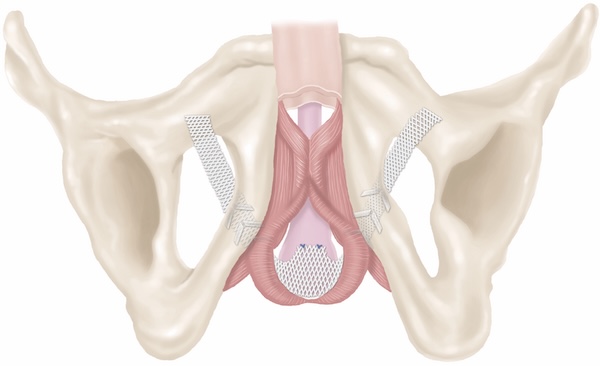
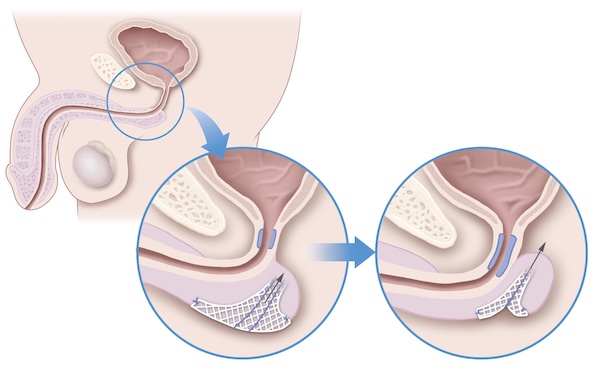
The Advance XP sling procedure is done on an outpatient basis and is performed under anesthesia. Small openings are made to access the urethra and the urinary sphincter. The sling is placed under the urethra and tensioned to reposition the urethra and optimize the sphincter’s function. Most patients are continent immediately following the procedure and can resume normal, non-strenuous activities within a few days.
Complications may occur. Risks include, but are not limited to, device failure, urinary retention, post-operative pain, irritation at the wound site and foreign body reaction.
Alternatives to the sling are external devices such as a Cunningham clamp or other compression device, an artificial urinary sphincter, a ProAct device.
Many men suffer from a small amount of leakage after their prostatectomy's and/or other types of procedures with just a small amount of pad use. Urethral sling can be helpful for those men. The choice of when to do the procedure is a very personal one. Typically men wait at least 12 to 18 months after the prostatectomy before choosing to do any surgery for urinary leakage. Further evaluation and treatment either with cystoscopy or urodynamics to evaluate bladder function and sphincter integrity and biofeedback sessions to try to encourage sphincter strength.
Standad recommendations to prepare for surgery. Avoid blood thinners. Don't eat or drink after midnight on the day or your procedure. Arrived to the hospital on time and prepared to stay one night in the hospital
Recovery is also straightforward Limit physical activity and heavy lifting for 6 to 12 weeks after the procedure. This is the most critical thing as the sling can slip along its connecting points around the pubic bone. You may shower 24 hours after your procedure, but not a tub bath. Take pain medication as needed and use a stool softener as needed to avoid constipation.
In a few cases men will have retention after the procedure and need a catheter for a short period of time after the surgery.
For further information please see the Boston Scientific website dedicated to this problem at fixincontinence.com